GE Flyrcado™ × Cardiac Suite

Cedars-Sinai Cardiac Suite is ready to help you get the most out of Flyrcado studies

Cardiac Suite contains many features designed to work with GE Healthcare’s Flyrcado myocardial perfusion imaging radiopharmaceutical, including tools for perfusion, myocardial blood flow, function, and dyssynchrony analysis.

Myocardial Perfusion Quantification

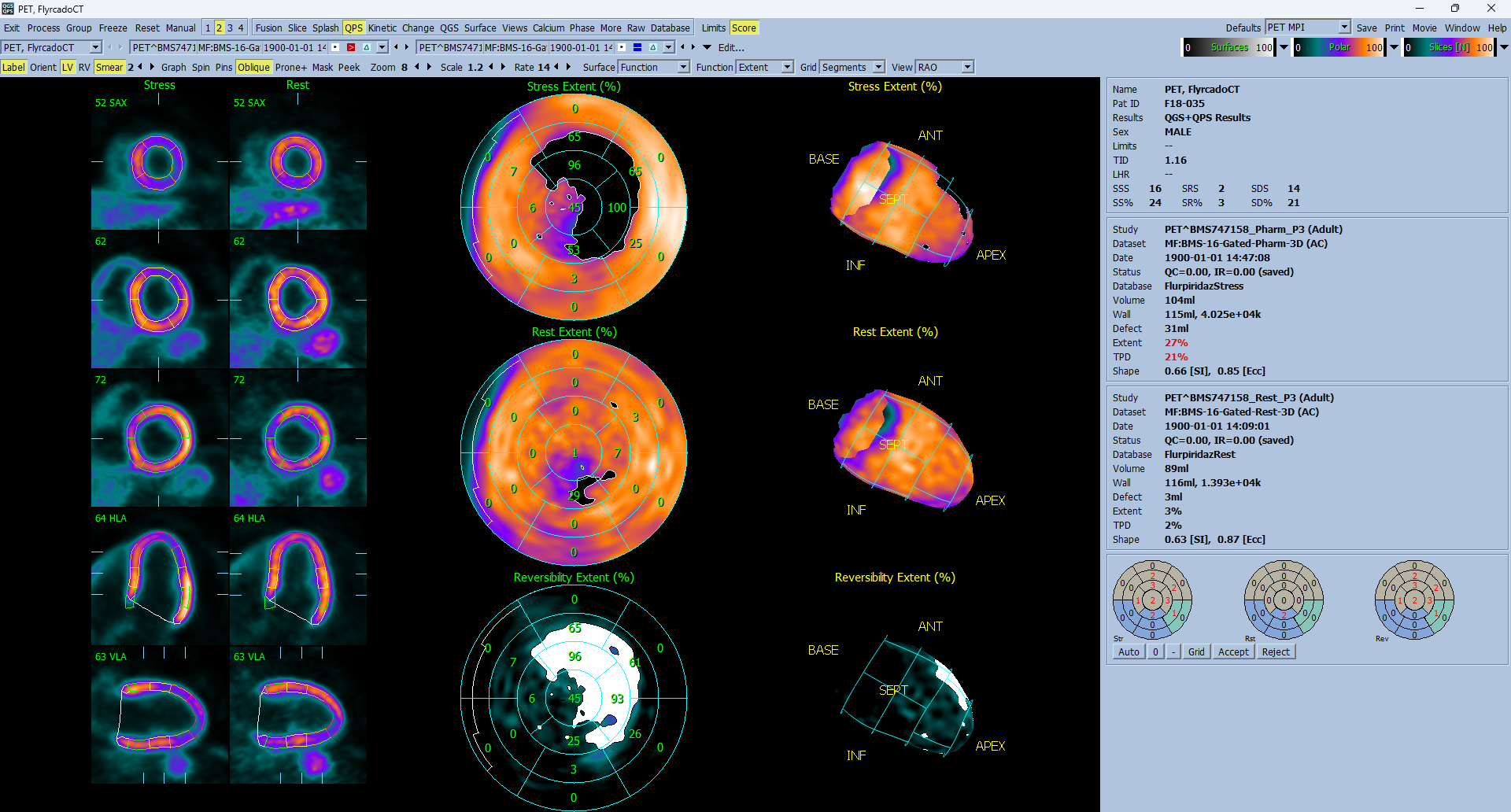
Cardiac Suite 2017.25 and newer versions include perfusion quantification databases (“normal limits”) for stress and rest studies. Semi-quantitative scores, defect severity and extent, and TPD are calculated automatically when the images are processed. The Change page also offers a direct comparison of stress/rest or prior/latest images.

Flyrcado stress/rest pair in the QPS page

The QPS page showing defects and ischemia measures derived from Flyrcado-specific normal limits.

Flyrcado stress/rest voxel comparison in the Change page

The Change page shows a voxel-based comparison between stress and rest images, producing an “ischemia” image and polar map. Defects shown are derived from Flyrcado-specific normal limits.

Flyrcado stress/rest pair in the Splash page

In the Splash page, the Cover option ensures that the entire ventricle is covered by the available slices (from apex to base, septum to lateral wall, and inferior to anterior wall). The Sync toggle allows for simultaneous scrolling of the stress and rest datasets.

References

  • Builoff et al. Subendocardial quantification enhances coronary artery disease detection in 18F-flurpiridaz PET. EJNMMI 2025 Jul; 52(9):3342-52.
  • Slomka et al. Automatic quantification of myocardial perfusion stress-rest change: a new measure of ischemia. JNM 2004 Feb; 45(2):183-91.

Myocardial Blood Flow and Flow Reserve

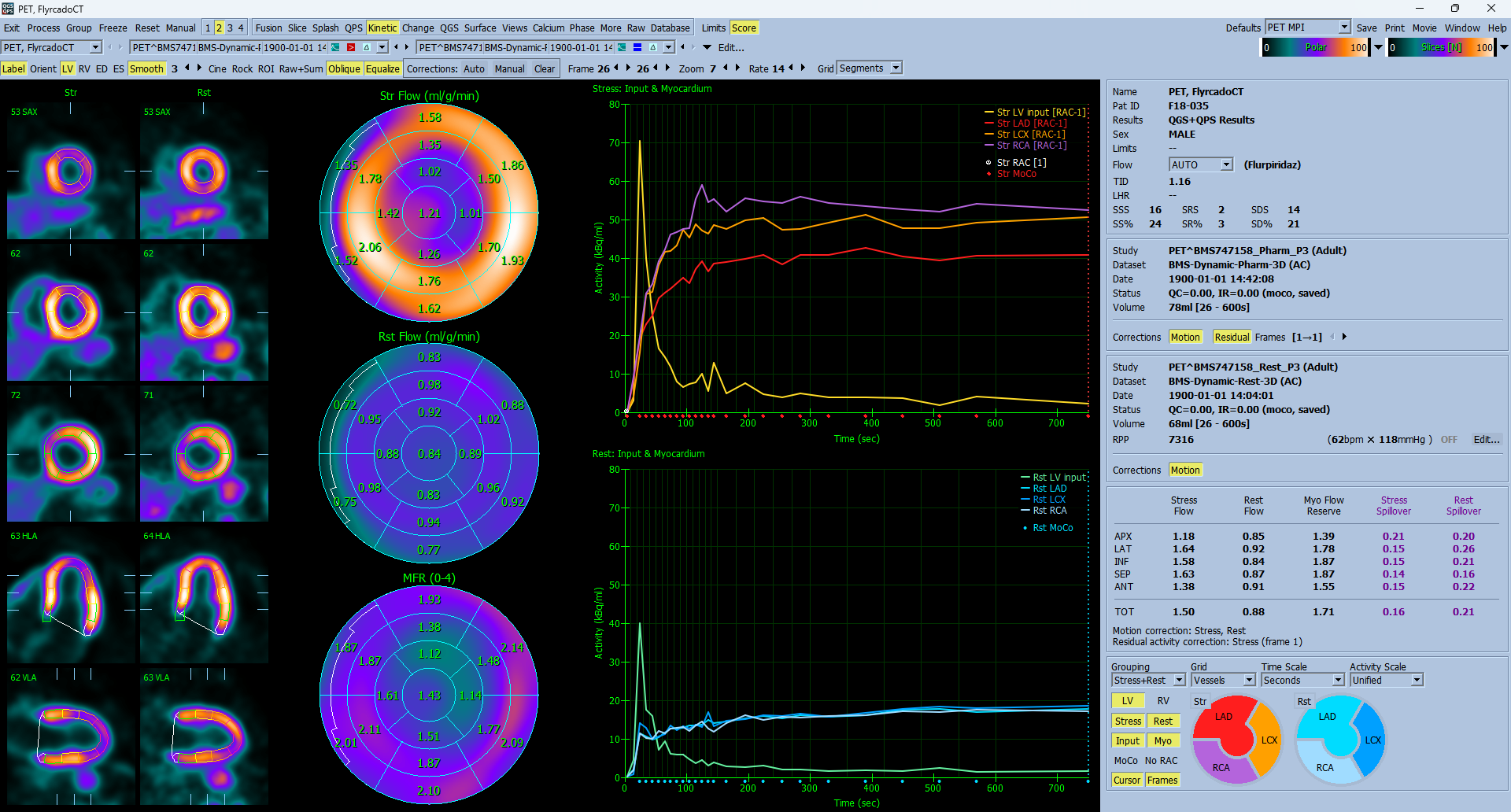
In addition to an 18F-flurpiridaz kinetic model, Cardiac Suite includes automatic and manual kinetic motion correction (including image rotation in manual mode), residual activity correction, and configurable rate-pressure-product correction. Editable kinetic model parameters provide software futureproofing and research capabilities. The Kinetic page is shown below.

Dynamic Flyrcado stress/rest pair in the Kinetic page for myocardial blood flow analysis

References

  • Xu et al. Relationship of subendocardial perfusion to myocardial injury, cardiac structure, and clinical outcomes among patients with hypertension. Circulation 2024 Oct; 150(14):1075-1086.
  • Otaki et al. Improved myocardial blood flow estimation with residual activity correction and motion correction in 18F-flurpiridaz PET myocardial perfusion imaging. Eur J Nucl Med Mol Imaging 2022 May; 49(6):1881-1893.
  • Packard et al. Comparison, Agreement, and Significance Cutoffs of 18F-Flurpiridaz PET Myocardial Blood Flow Quantitation Methods and Software Packages. J Nucl Med 2025 Nov; 66(11):1674-1682.

Image Fusion for Registration Quality Control

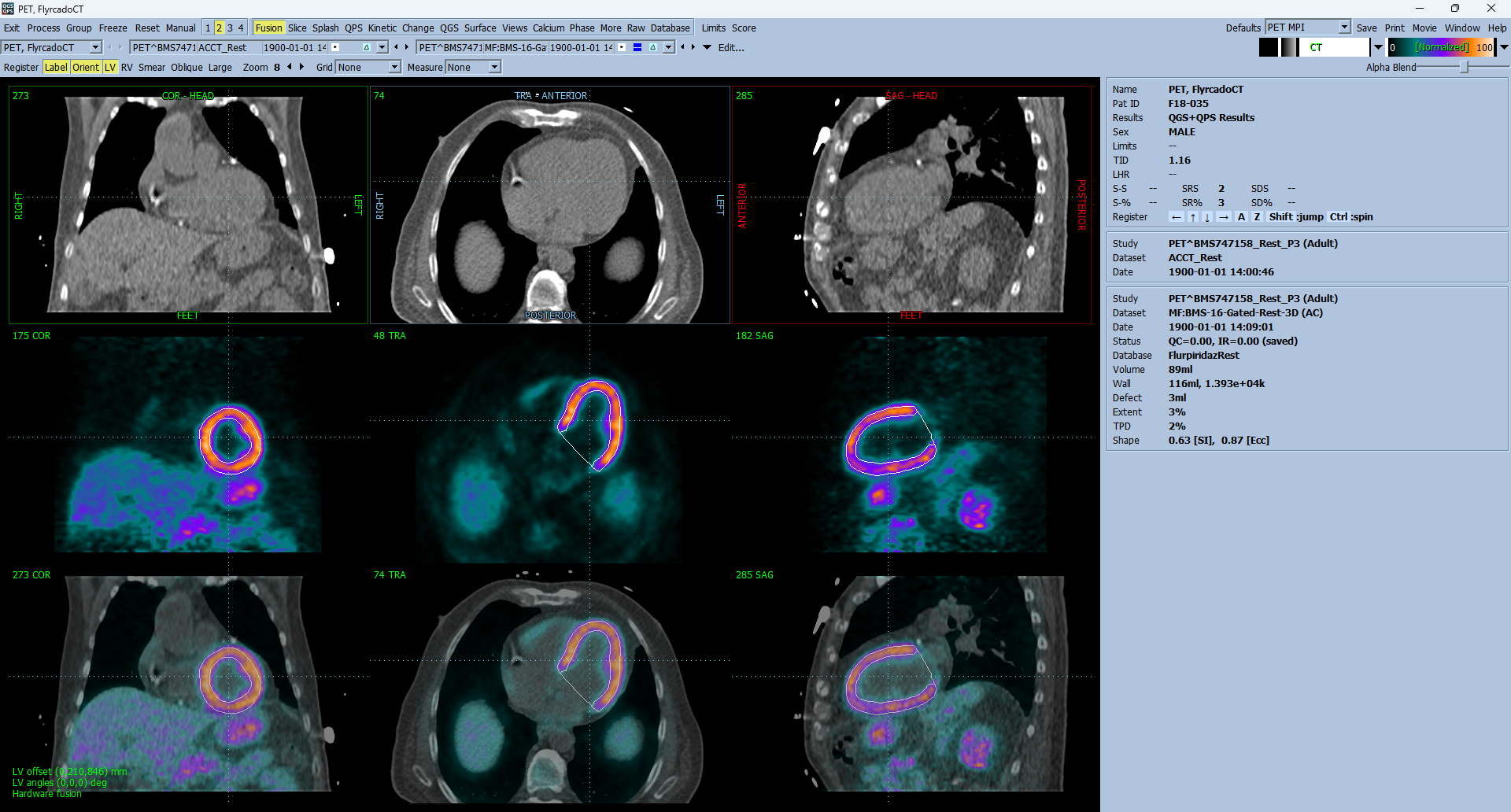
The Fusion page provides the ability to review the registration of PET and attenuation CT images. Misregistration is likely to cause perfusion artifacts and should be reviewed for every study.

Flyrcado registration QC in the Fusion page

The Fusion page shows CT, PET, and overlaid PET/CT images in transverse, coronal, and sagittal views.

Ventricular Function

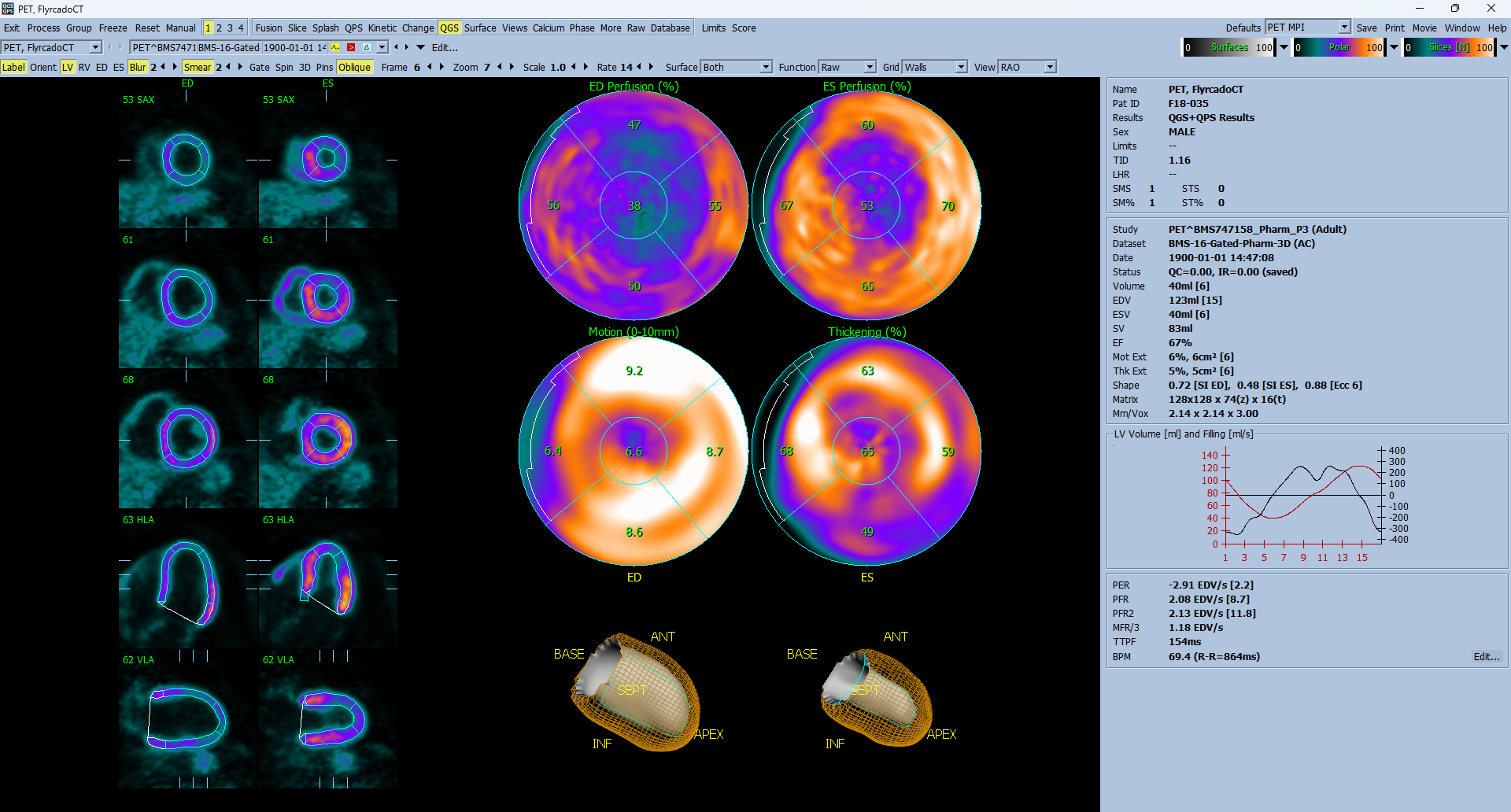
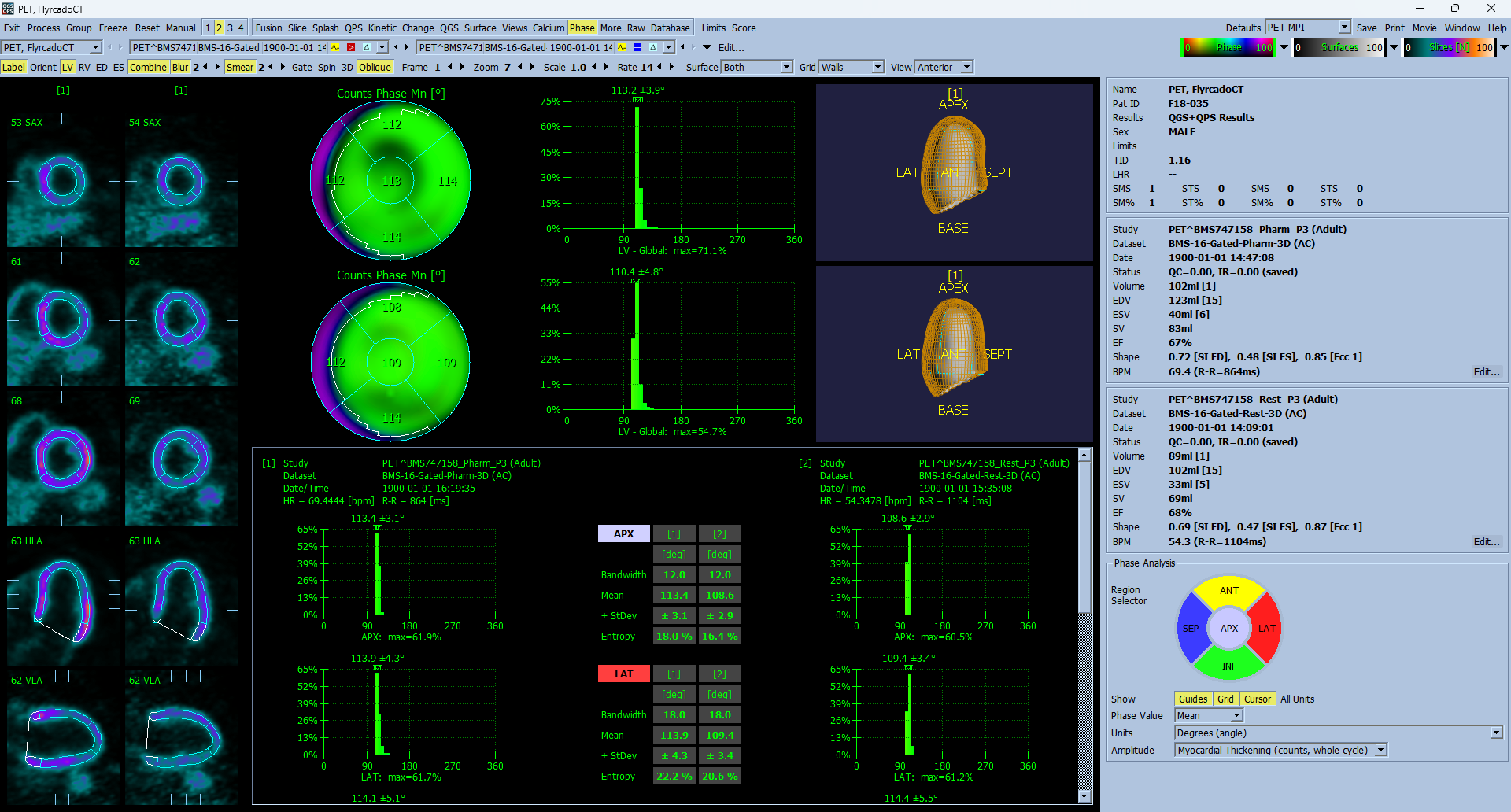
Systolic and diastolic function analysis is available in the QGS page, while dyssynchrony analysis is available in the Phase page.

Flyrcado gated image in the QGS page

The QGS page summarizes systolic and diastolic function for a pharmacologic stress dataset.

Flyrcado stress/rest gated pair in the Phase page

The Phase page shows global and per-wall dyssynchrony analysis for both the stress and rest datasets.

Flyrcado is a trademark of GE Healthcare.